





Sweet Bonanza

Sweet Bonanza Bonus: Bonuses and Wins

See how the max win works in Sweet Bonanza, how to read promotions, and how to set limits for a more relaxed gameplay experience.

Sweet Bonanza demo
maxwin image 1
Sweet Bonanza

Sweet Bonanza Max Win – Understanding the Win Cap

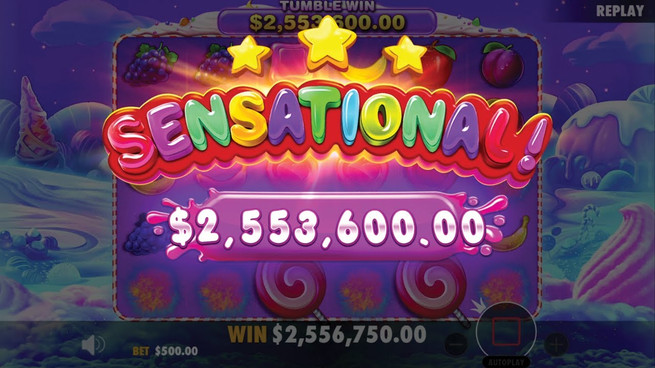
The maximum win is the upper limit of the score from a single round at a given stake, not a promise that "it will definitely land someday." Imagine this scenario: you have a cascade series, multipliers kick in, and suddenly the score grows faster than expected—you naturally wonder if even more is possible. This is precisely where awareness of the fact that every game has a ceiling—rarely reached—comes in handy.

In Sweet Bonanza, larger hits usually result from a combination of symbol values, consecutive "drops" after wins, and multipliers. Don't chase a single event. It's better to stick to a betting plan, as the cost of "seeking" such a round increases alongside emotions and game tempo.

It's also important to clearly distinguish two things: "maximum multiplier" and "maximum cash payout." The latter always depends on the stake, so expectations should be calculated straightforwardly: how much can you realistically allocate for a session, and how many spins do you intend to complete before deciding it's over? Usually, players dream big first and only later consider budgetary consequences—reverse this order.

Sweet Bonanza

Top casinos for playing Sweet Bonanza — current list

ALF Casino

ALF Casino

Mafia Casino

Mafia Casino

SG Casino

SG Casino

Retro Bet

Retro Bet

leovegas

LeoVegas

Sweet Bonanza

What Really Creates Big Wins in Slots

You control the stake and pace, while hit frequency and the duration of losing streaks are inherent to the title. Visualize this scenario: you start a few spins during a break, after a minute you begin rushing and clicking faster because "now or never." The slot doesn’t know your schedule, so it's better to tailor the session to your personal limits.

Higher-volatility games often feature more "dry spells," but the potential of a single round is greater. To avoid frustration, treat breaks in winnings as a normal part of gameplay and don’t increase your stake merely because there have been a few blank spins. After a big win, take a break—often, players lose not because "things are going badly," but because they immediately raise risk levels after winning.

A simple habit also helps: evaluate sessions in blocks, not "live." Instead of reacting to every spin, pause every few minutes, check your balance, and ask yourself if you're still playing as planned. If the answer is "no," that's not a cause for shame—it's a signal to slow down or stop.

Sweet Bonanza

Session and Stake Plan—Before You Press Spin

The best decisions are made before starting: budget, time, and stop-loss rule. Imagine playing "in the background" in the evening, with your hand automatically clicking spins. In such conditions, the plan must be simple; otherwise, it will lose to impulse.

How to Set a Budget and Playing Time

Set an amount for the session that you won't renegotiate mid-play. If you usually "throw in a bit more," divide your budget into parts—when two are depleted, you stop. Picture this: you want to decompress but know you have an important day tomorrow. Such division protects you from extending play, as the rule is clear.

Time works similarly. Set a timer, and when it rings, take a break, check your balance, and only then decide whether to continue playing. For many people, a simple "emotional stop" also works: if you feel anger or euphoria, you pause before clicking the next spin.

Choosing Stake and Controlling Volatility

The stake should match your budget, not your dream of a big win. Often, players start too high, quickly deplete their pool, and only later lower it—but emotions are already charged. Imagine this scenario: after a few minutes, each spin feels painful, so you speed up to "get it over with." This is a sign that the stake was ill-chosen.

Calculate how many spins you'll complete before reaching the limit. If the number is low, lower the stake or shorten the session—both actions reduce pressure. If possible, test pace and comfort in demo mode: it's not about results, but about whether your playing style suits you.

Quick Checklist Before Starting

Check balance and limits, choose a slower pace, set a reminder for a break. If you play in Poland and the platform offers deposit, loss, or time limits, enable them before the session—later, adherence becomes harder. It's also advisable to disable automatic stake increases if you’re prone to them.

When to Stop and Lock in a Win

Pre-plan to take a break after a big win and only then decide: end play, withdraw part, or continue per plan. Imagine this scenario: "just two more spins and I’m done" sounds innocent but often starts a longer series. Set a simple rule, e.g., a break after each significant balance jump.

If you enter play "to recover losses," end the session immediately. This is the hardest—but cheapest—decision, as subsequent spins made under stress usually ruin the plan and budget.

maxwin image 2
Sweet Bonanza

Account, Payments, and Payouts for Players in Poland

Nerves most often stem not from the game itself, but from payments and verification. Imagine this scenario: you’re in the mood for a short session, and halfway through, you’re asked for additional details. If you handle this in advance, you’ll play more calmly.

Also remember the fundamental rule: it's entertainment for adults and should operate within the platform’s rules and limits in Poland, without resorting to shortcuts. By sticking to simple rules, you avoid most problems with deposits and withdrawals.

Registration, Verification, and Account Security

After registration, identity verification often appears—usually required for secure payouts and compliance. If you prefer speed, here’s where slowing down pays off: complete verification before your first major deposit. Imagine this scenario: you win and want to withdraw, but only then do extra steps begin—this easily ruins your mood.

Cover the basics: strong password, additional login verification (if available), and up-to-date personal information. Don’t mix data from different documents, as minor inconsistencies can prolong the process.

Mobile Payments and Limit Settings

Choose methods matching your style and aiding expense control. Often, players favor "one-click" options, but this is also the fastest path to impulsive top-ups. Imagine this scenario: after a few losing rounds, you want to add funds because payment is instantaneous—then limits and notifications do the work.

Pay attention to the settlement currency and any potential currency conversion—minor differences may go unnoticed at deposit time but surprise you later in transaction history. To avoid surprises, stick to one trusted method.

The table below helps compare common options from the player’s perspective: what to check before depositing and what may affect payout speed.

Payment Method (Example)

What the Player Checks Before Deposit

What Usually Affects Payout

Quick Tip

Debit/Credit Card

Bank limits, confirmations, currency

Data consistency, bank procedures

Keep a dedicated entertainment limit

Bank Transfer

Recipient details, bank sessions

Account verification, name match

Initiate transfer earlier when playing in the evening

E-Wallet

Login process, wallet limits

Account linking, confirmations

Enable transaction notifications

Mobile Payment

Authorization, daily limits

Method compatibility with payout

Set lower daily limits

Prepaid Voucher

Denominations, fees

Withdrawal restrictions

Treat vouchers as a fixed budget

Withdrawal, Documents, and Support Contact

Payout time depends on the method and whether your account is already verified. It usually works most smoothly when you withdraw to the same method used for deposit. Imagine this scenario: you change the method "at the last minute" because it seems more convenient—this often triggers additional questions.

Have essential documents at hand and capture photos or scans in high quality. If something fails, don’t blindly retry—review the error message, correct the detail, and retry only then. This saves time and avoids multiple submissions.

When contacting support, be specific: date, method, amount, and what exactly you see on screen. Such requests are resolved fastest.

Sweet Bonanza

How Promo and Bonus Systems Work in Practice

Promotions only make sense if you know their terms. Imagine this scenario: you click "accept" because it looks good, then discover stake or time restrictions. Approach offers like a short contract—read key clauses first, then decide.

Offer Types: From Free Spins to Cashback

Most common: extra funds, free spins on selected titles, partial loss refunds, or loyalty missions. Often, players accept everything and later get lost in the rules. If you aim to "maximize everything," first define your goal: longer session, game testing, or balance building for payout.

Free spins are convenient but often have their own stake limits and caps on how much of the winnings can be transferred to the main balance. Partial loss refunds sound like "protection," but they can encourage longer play—treat them as a bonus, not a reason to increase risk.

Wagering Conditions: What to Check Line by Line

Check three things: required wagering, time limit, and stake limits. Imagine this scenario: you think you’ll "get around to it" someday, but the condition expires quickly and you start playing chaotically. Calculate how many spins you can realistically complete at your own pace, not in an ideal world.

A simple method: take the bonus amount, multiply by the required wagering, then estimate how many rounds you need at your stake to fulfill it. If you see you’d have to play longer than planned or increase your stake, decline or choose a smaller offer.

Also check whether chosen games count fully toward wagering. If terms are unclear, better not activate the promotion—playing without a bonus can simplify payouts.

Bonus and Maximum Win: Aligning Expectations

The bonus doesn’t change the fact that large wins are rare, and bonuses often add conditions. Imagine this scenario: you feel pressure because "there’s still some wagering left," so you raise your stake and speed up. This is the simplest path to exceeding your budget.

Treat the promotion as a bonus. If you planned to play anyway, it can extend the fun. If you didn’t plan to play, it often becomes a chase. Safest is to maintain the stake from your plan and not change rules solely because a bonus appeared.

Common Mistakes That Make the Bonus Not Worthwhile

Most people activate offers without reading stake/time limits, then try to "catch up" in one session. Imagine this scenario: you play longer only because "it’d be a waste to quit"—at that point, the bonus controls you, not vice versa.

A simple test helps: would you keep playing if this promotion didn’t exist? If not, stop and set the topic aside for another occasion. Over time, this approach saves money and nerves more than the best promotion ever could.
maxwin image 3

Responsible Gaming and Control Tools

Limits, time-reminders, and transaction history are tools that keep gaming in check. Imagine this scenario: you tell yourself you'll play “just a few minutes,” but after an hour, you have no idea how much you've spent. With limits and summaries in place, it’s harder to fall into autopilot.

Short self-checks also work well: “Is this game entertaining me, or am I being pulled in?”, “Am I raising my bet as planned, or due to emotion?”, “Was today’s session assigned a limit?” If answers aren’t clear, it’s better to take a break than find another reason to keep playing.

In Poland, it’s beneficial to use responsible gaming settings: deposit, loss, and time limits, as well as temporary self-exclusions. It’s simpler than promising yourself it “will be better next time.”

Timeout, Self-Exclusion, and Immediate Help

A timeout is a short break, whereas self-exclusion is a longer-term decision — both work when you notice emotions taking control. Picture this situation: you’re losing and want to “chase” it within the same session. Often, the best move is to take a break: close the app, do something else, and only return once you’re calm.

If unsure, keep a simple session journal: date, time, budget, mood. After a few entries, patterns emerge. And if you need support, reach out to specialized local help — a conversation often yields more than another spin.

FAQ

How do you understand “maximum win” in practice?

It's the upper limit of results from a single round at a specific bet level, not a target the game is “aiming for.” Imagine a series of cascades and multipliers — the result rises quickly but still stays within the defined cap. In daily play, balance fluctuations and streak length without hits matter more, as they directly affect your budget and emotions. Treat the cap as a technical detail, and plan your sessions within your personal boundaries.

Can I increase my chances of hitting a big win?

You can't control the outcome, but you can control your decisions. Often, players choose bets that are too high, causing them to exhaust their session before a more exciting moment occurs. If you align your bet size with your budget and take breaks, it’s easier to avoid impulsive risk increases after a win or after a dry streak. While this doesn’t guarantee a big hit, it increases your chances of playing calmly and consistently.

What should I check before activating a promotion?

Review the required turnover, the timeframe to meet it, and betting limits. Imagine this scenario: you have two evenings per week for entertainment, but the promotion’s requirement expires quickly — so you start playing chaotically. Check whether selected games count fully toward turnover, and whether there are payout restrictions on winnings. If the terms are unclear, it’s better to skip the promotion and play on clean, straightforward conditions.

Why are limits and breaks so important?

Because rapid clicking easily slips into autopilot. Imagine playing “in the background” and not even noticing how many spins you've clicked. Time or deposit limits act like stop signs — they pause you momentarily, letting you check whether you’re still playing for fun. A break after emotional highs restores clear judgment and protects against chasing losses.

What should I do if a withdrawal is delayed?

Gather information: withdrawal method, order date, and any messages in your account dashboard. Usually, delays stem from additional data verification or method-dependent processing times. Imagine this situation: you change the method at the last minute because it seems more convenient — often adding extra steps. Contact support with specifics (date, amount, method, what you see), and the matter usually resolves faster.

How do I recognize when it’s time for a timeout?

If you keep telling yourself, “Just one more spin and then I’m done,” only to do another, and another — that’s a red flag. Picture being tired or agitated yet continuing because “it’d be a waste to stop now.” A timeout works best as a quick emotional block — after the break, returning to your plan or stepping away longer becomes easier.

Play Now
🇬🇧 English